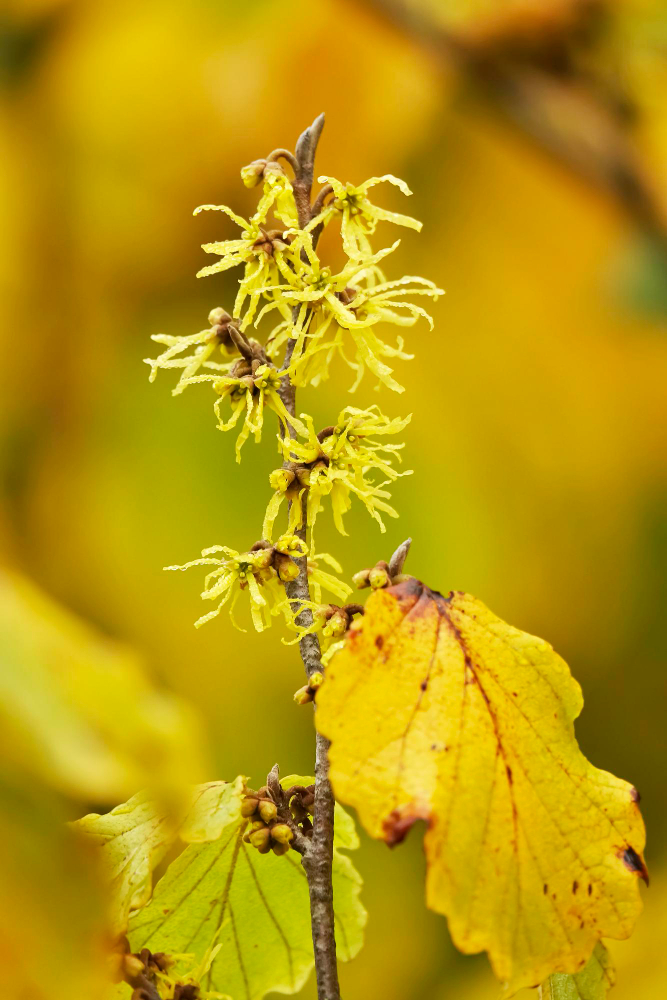
As the festive decorations come down and the January frost settles over the garden, it is easy to think that the landscape has gone into a deep slumber. However, look a little closer at the bare winter borders and you might find one of nature’s most peculiar and enchanting sights: Witch Hazel (Hamamelis).
Known for its resilience and intoxicating fragrance, Witch Hazel is the perfect plant to kick off 2026. Here is why this winter wonder deserves a spot in your garden and on your radar this month.
A Burst of Midwinter Fire
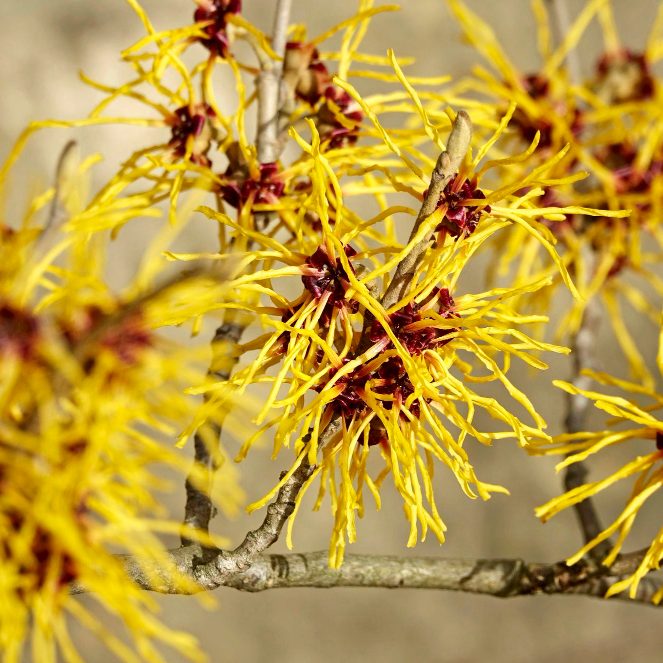
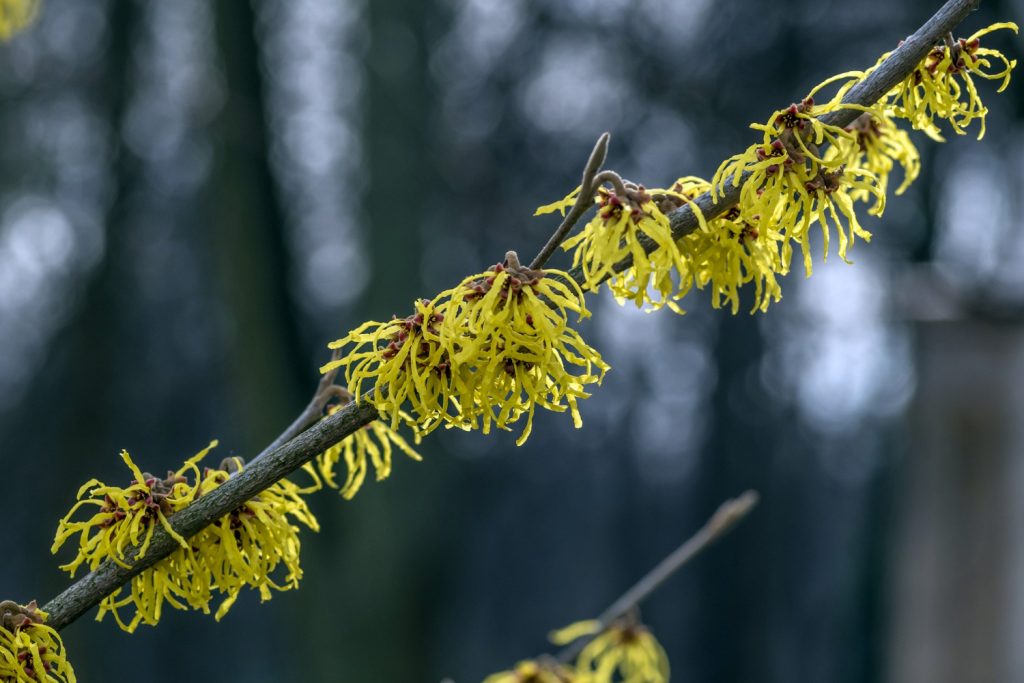
While most plants are waiting for the first hints of spring, Witch Hazel thrives in the cold. Its most striking feature is its unusual, spider-like flowers. These narrow, ribbon-pale petals appear on completely bare branches, looking like tiny explosions of gold, orange, or crimson against the winter sky.
The petals have a fascinating survival trick: they can curl up tightly into a ball when the temperature drops to protect themselves from frost, unfurling again as soon as the day warms up.
The Scent of January
If the visual appeal isn’t enough, the fragrance certainly will be. On a crisp, still January day, the scent of Witch Hazel can carry across an entire garden. Depending on the variety, the aroma ranges from a light, spicy citrus to a deep, honey-like sweetness. It is a welcome sensory reminder that life is still very much present in the garden.
Perfect for Jersey Gardens
In the UK and particularly in Jersey, Witch Hazel finds an ideal home. It appreciates our relatively mild winters and acidic to neutral soils. Because it is slow-growing, it is a fantastic choice for smaller gardens or as a focal point in a mixed shrub border.
Top Tip: If you are planting one this year, choose a spot near a path or a doorway. You’ll want to be able to catch that incredible scent every time you leave the house!