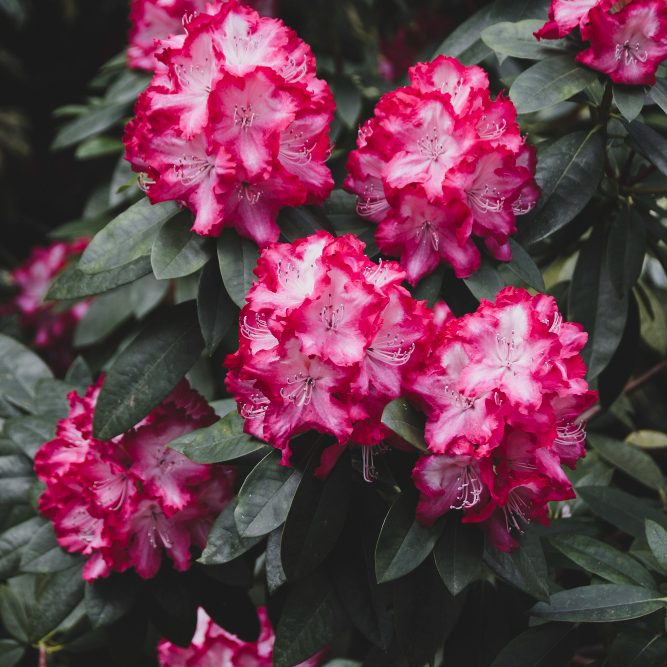
Following the gold standards to ensure your Rhododendrons flourish.
1. Planting: The “Acid Test”
The most critical factor for a healthy Rhododendron is soil pH. They are ericaceous plants, meaning they crave acidic soil (ideally between pH 4.5 and 6.0).
- Check Your Soil: If your Jersey garden is more alkaline (common in coastal areas with shell sand), don’t fight nature—grow them in large pots using ericaceous compost.
- The Shallow Secret: One of the most common mistakes is planting too deep. Rhododendrons are surface-rooters. Ensure the top of the root ball is just level with the soil surface.
- Location: They love “dappled shade.” Too much sun can scorch the leaves, while too much shade leads to leggy growth and fewer flowers.
2. Caring: Hydration and Nutrition
Rhododendrons are remarkably thirsty, but they are also picky about what they drink.
- Rainwater over Tap: Jersey tap water can sometimes be slightly alkaline. Over time, this raises the soil pH and turns the leaves yellow (chlorosis). Whenever possible, use collected rainwater.
- Mulching is Magic: Apply a 5–8cm layer of leaf mould, composted pine needles, or chipped bark every spring. This keeps the roots cool and moist. Just keep the mulch away from the main stem to prevent rotting.
- Feeding: Use a dedicated ericaceous fertiliser in late winter or early spring. Avoid over-feeding; they aren’t as hungry as roses!
3. Pruning: The Light Touch
Generally, Rhododendrons require very little pruning. In fact, you can leave them to their own devices for years.
- Deadheading: For smaller varieties, gently snap off the faded flower heads. Be careful not to damage the tiny growth buds directly underneath—this is where next year’s flowers are already starting to form.
- Rejuvenation: If you have an ancient, leggy specimen, we suggest “hard pruning.” You can cut it back to old wood in late winter. They have amazing powers of recovery from “dormant buds” in the bark, but it may take a season or two to flower again.