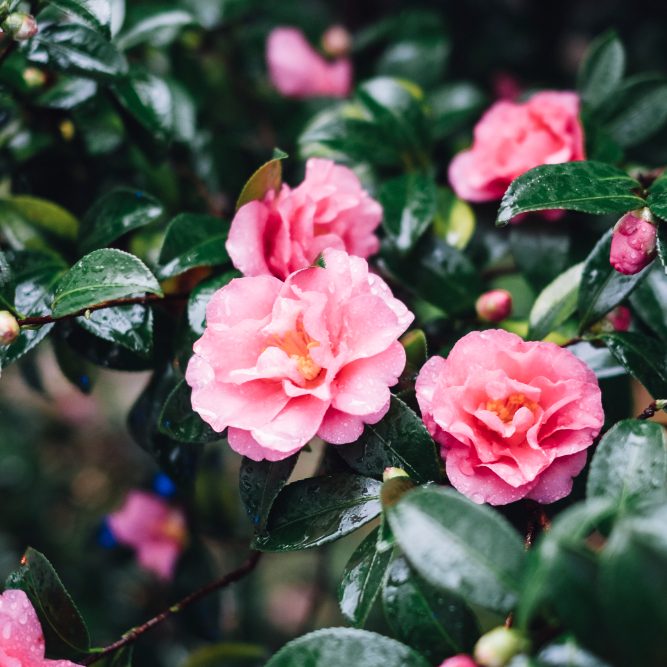
Camellias are the elegant aristocrats for our gardens, with their glossy, evergreen leaves and rose-like blooms. Here is how to keep your Camellias looking like they belong in a botanical garden.
1. The Perfect Start: Location and Soil
Camellias are woodland plants at heart. They don’t just want a hole in the ground; they want a specific “vibe.”
- East is Not Best: This is the golden rule. Avoid planting Camellias in an east-facing spot. If a frost hits, the early morning sun thaws the buds too quickly, causing them to turn brown and drop off before they even open. Aim for north or west-facing sites.
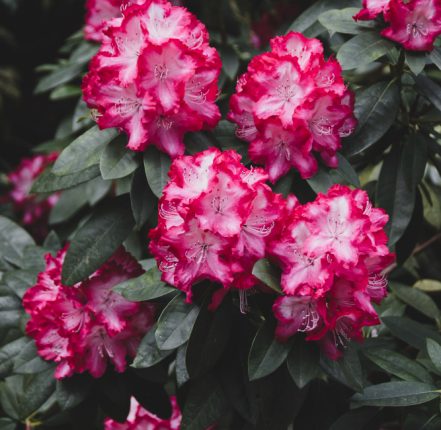
- The Acid Test: Like their cousins the Rhododendrons, Camellias need acidic to neutral soil. If your garden is on the more alkaline side (common in areas with lots of sand or old building rubble), they will struggle.
- Pot Power: If you can’t provide acidic soil, Camellias are arguably the best shrubs for large pots. Use a high-quality ericaceous compost and ensure the pot has plenty of drainage.
2. Planting: Keep Your Head Above Water
One of the most common reasons Camellias fail to thrive is being planted too deeply.
- Shallow Planting: The top of the root ball should be level with—or even slightly above—the soil surface. Burying the stem can lead to rot and slow growth.
- Shelter: While hardy, their flowers are delicate. Protect them from Jersey’s Atlantic gales by planting near a wall, a sturdy hedge, or under the canopy of larger trees.
3. Caring: The “Summer Drink” Secret
Most people think about Camellias in the spring when they flower, but the most critical time for their care is actually July to September.
- Bud Formation: This is when the plant is “deciding” how many flowers to give you next year. If the plant dries out during these months, the buds will fail to develop or drop off in the winter.
- Rainwater is King: Tap water can be slightly alkaline, which builds up over time and yellows the leaves (chlorosis). Use a water butt to collect our Jersey rain—your Camellias will thank you for the softer touch.
- Feeding: Use a dedicated ericaceous fertiliser in early spring and again in June. Avoid feeding after July, as this can lead to soft growth that gets zapped by the first autumn frost.
4. Pruning: Less is More
Generally, Camellias are slow-growing and maintain a lovely natural shape, so put the shears away for the most part.
- The Window of Opportunity: If you must prune to shape the plant or clear a path, do it immediately after the flowers fade. If you wait until summer, you’ll be cutting off next year’s flower buds.
- Hard Pruning: If you have an old, “leggy” Camellia that has seen better days, they are surprisingly tough. You can cut them back quite hard in late winter (March), and they will usually sprout new growth from the old wood, though you might lose a year of flowering.